The ‘messy middle’ of recovery: An interview with Mallary Tenore Tarpley
When I read this book’s blurb, a few months before it was released, I was struck by the similarities between the author’s story and mine:
Losing a mom to cancer at a young age
Developing an eating disorder
Making progress in recovery, but never quite feeling like we’ve made it to the finish line
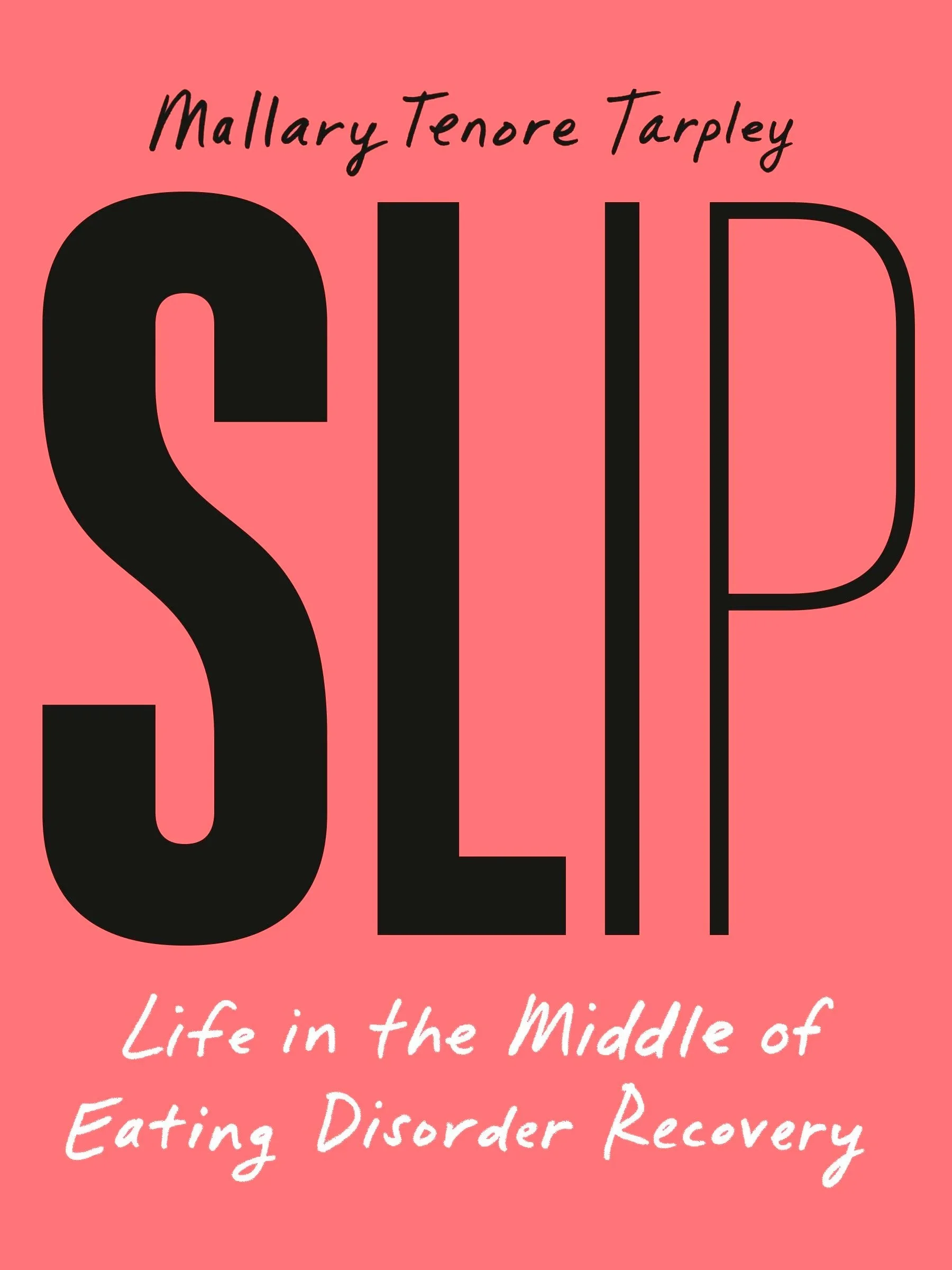
Once I read SLIP: LIFE IN THE MIDDLE OF EATING DISORDER RECOVERY by Mallary Tenore Tarpley, I clung to these shared experiences, especially the reality of never feeling fully recovered, but instead learning that recovery is a daily act, and a lifelong commitment.
Mallary was kind enough to let me interview her about her book. Her research, interwoven with a personal narrative about her experience, led her to define what she calls “‘the middle place’—the liminal space between sickness and full recovery, a place where slips are accepted as part of the process and progress is always possible.”
Allie: In SLIP, you share how your mother’s death shaped your relationship with perfectionism and self-worth. How do you think grief impacts identity in ways that aren’t always obvious or easy to name?
Mallary: My mother never told me I needed to be perfect, but I often felt as though she wanted me to be. After she died, I found myself trying to be even more perfect because it felt like a way to stay close to her.
Losing my mother at age 11 impinged on my feelings of self-worth, and perfectionism was a way to get external validation. People praised me for being perfectly poised and seemingly resilient in the aftermath of my mother’s death, not realizing how much I was hiding behind a happy facade. So many called me “strong” in the aftermath of my mother’s death, and that shaped my identity at the time. It made me think that I could earn people’s praise if I pretended I was perfect and okay, even when I wasn’t.
Allie: You describe growing up hearing a lot of “stay positive” messaging, especially during your mom’s illness. Looking back, how do you think that influenced how you processed grief, and how did this type of thinking show up later in your eating disorder?
Mallary: We tend to think of children as being incredibly resilient. But this can lead people to undermine or overlook what’s really happening beneath the surface. When we only focus on children’s resilience (real or imagined), we miss the opportunity to explore other aspects of their lived experience. I didn’t realize this until much later, once I was far along in my eating disorder recovery.
Allie: When your eating disorder was developing, you write that you didn’t fully recognize it, especially because it didn’t match the stereotypical image of anorexia. You also share how hard it was to define what you were going through. Why do you think so many people fall into that gray area where their experience doesn’t match the narrative we’ve been taught about eating disorders?
Mallary: As a 12-year-old, I really didn’t think I had anorexia. I was of the mindset that people with anorexia didn’t eat anything at all. Because I was still eating, I didn’t think it was possible for me to have an eating disorder.
My father didn’t think I had an eating disorder either because he thought these disorders only affected older women. His only point of reference at the time (in the late 1990s) was the death of singer/songwriter Karen Carpenter, who died due to complications from anorexia in 1983. We both knew so little about eating disorders. In some ways, it felt like a relief when I finally was diagnosed with anorexia because we finally had a name to describe what I was struggling with.
“I think we’ve adhered to a narrow narrative of eating disorders for far too long.”
I think we’ve adhered to a narrow narrative of eating disorders for far too long. We think of them as diets gone wrong, or we assume they only affect skinny, white, affluent girls. But they are so much more complicated than that, and they affect a diversity of people. Collectively, we now know more about these disorders than we used to, but there are still so many misconceptions that are perpetuated in the media, on social platforms, and in literature.
As an author and journalist with lived experience, I try to dispel these misconceptions and believe that writing is a powerful tool for helping people to better understand the nuances of eating disorders and the recovery process.
Allie: One of the book’s central themes is the “middle place” between illness and full recovery, as a space people live in, but we don’t hear much about. Why do you think the middle part of the story is so often skipped over or ignored?
Mallary: We live in a society that prefers protagonists who prevail, and so many stories are based on this idea. Traditionally, most books on eating disorders have either been written by clinicians or from the perspective of people who are fully recovered. When the only recovery narratives we hear are from those who are fully recovered, it can make those of us who aren’t feel ashamed and stigmatized. This stigma and shame lead to silence.
For a long time, I thought I had to be fully recovered from my eating disorder before I could write and publish a memoir because I didn’t know if it would have value otherwise. But that changed in 2020, after I wrote an essay for The New York Times about how losing my sense of taste and smell triggered a brief lapse. In the piece, I wrote about the middle place for the first time publicly and heard from so many readers who said they could identify with it. That gave me the confidence to realize that I could write my memoir from the perspective of someone who is still very much in recovery, rather than Recovered with a capital R.
I surveyed over 700 people who have lived experience with eating disorders, and I found that 85% of them said they could identify with the middle place. It’s a populous space, and yet it’s not talked about nearly enough. I’m trying to change that with my writing and work.
Allie: You incorporate the idea of “restorative narratives” as a way of telling stories that don’t skip from suffering to a clean, resolved ending, but instead stay with the complexity. How did this concept change the way you understand your own story?
Mallary: When I was in my late twenties, I was director of a media nonprofit that was developing a new storytelling genre called restorative narrative. These narratives show how people and communities find resilience in the aftermath, or the midst of, difficult experiences. They’re not fluff pieces that romanticize resilience but, instead, deeply reported stories that explore pain, sorrow, grief—and human determination in the face of all that.
I was tasked with training journalists on how to tell restorative narratives, with a focus on helping them get better at telling stories about the “messy middle” of people’s lives. At a certain point, it occurred to me that this could be a really helpful framework for thinking about my own recovery narrative. I began to reflect on this, and wondered: What if instead of always striving for full recovery and feeling like I’m failing, I could instead think of my recovery as a middle place, where slips happen but progress is always possible?
For so long, I would berate myself every time I slipped. But once I started reframing my recovery around the middle place, I started to recognize slips as an important part of the process.
Allie: At one point, you write about how black-and-white your idea of recovery became—the idea that if you were “fully recovered,” you shouldn’t need help anymore, and that one small slip could undo everything. What helped you move away from this type of all-or-nothing thinking toward something more flexible?
Mallary: After years of being in treatment during my teenage years, I was petrified of making one wrong move. I thought that if I slipped just once—by skipping a meal, or overexercising, for instance—I would slide back into dangerous territory. This sparked self-induced pressure to look and be perfect at recovery, and I found myself striving to be the poster child for full recovery.
When I relapsed in college, I fell into a cycle of binge eating and restricting, and felt like I was failing at both anorexia and full recovery. I was good at hiding these behaviors, and I was maintaining what looked to be a “normal” weight, so no one knew I was struggling. I kept telling everyone I was fully recovered, even though I was very much struggling—in part because my view of sickness and recovery was still so black and white.
“Embracing the gray spaces in recovery is critical.”
Many years later, once I began reframing my recovery around the middle place, I began to recognize that embracing the gray spaces in recovery is critical. When you try to convince everyone that you’re already “over” your eating disorder when you’re really not, you stay stuck. By not speaking truth to your reality, you deny yourself the opportunity to make meaningful progress in the middle place.
Allie: You highlight how hard it can be to access and stay in treatment, especially when recovery doesn’t follow a clear, linear path. You point out that eating disorders don’t have a clear “removal” process, the way other illnesses might. Based on your research, where do you see the biggest gaps between how treatment is structured and what people actually need long-term?
Mallary: Many recovery narratives are rooted in this idea of removal: the tumor is excised; the stitches are taken out; the mediport is extracted.
But for people struggling with eating disorders, there is no easy removal, no easy remedy or redress. It’s why so many of us live our lives in the middle place, recovering but not completely removed from our eating disorder.
The idea that there’s a space between acute sickness and full recovery never came up during my five hospitalizations or year and a half in residential treatment. (For context’s sake, I was treated in the late 1990s/early 2000s.) The eating disorder field still largely pushes for full recovery for everyone, but I think there’s a growing awareness that people also need to be prepared for the ups and downs that accompany the recovery process.
There are now relapse prevention programs to help with this, and there is now “stepped care,” meaning people can “step up” or “step down” the intensity of treatment depending on their needs. The stepped-care model recognizes that eating disorder recovery is an up-and-down process, a middle place where progress and slips often coexist.
Allie: I appreciated your discussion of “normative discontent,” or the idea that body dissatisfaction is so common it almost feels normal. How do you think this cultural backdrop makes it harder for people to recognize when something deeper might be going on?
Mallary: I’m so glad you asked about this. As you said, normative discontent is the notion that most women experience some level of discontent with their weight, making that discontent more the norm than the exception.
The term first emerged in 1984, with more recent research showing that this discontent is pervasive among men, too. This speaks to the reality that it’s a difficult society to recover into. I think it can also help us to put our relationship with our bodies into perspective. To think we’re going to recover and never have a “bad body image day” is almost unrealistic in our society. This doesn’t mean we can’t work toward bodily acceptance; it just means that we shouldn’t be hard on ourselves if there are stretches when that feels harder.
I also think normative discontent can lead people to downplay the severity of their illnesses. In some ways, we’ve been conditioned to normalize disordered eating or eating disorders. I’ve given book talks in which audience members have asked, “Well, don’t all women end up having an eating disorder in college?” as if it were just something that everyone dabbled in at some point in their lives.
Similarly, I think people with eating disorders might think, “Well, this is normal to be struggling with food or my body” or “I’m not sick enough to have an actual eating disorder.” Just because it’s “normal” to have some level of discontent with our bodies doesn’t mean it’s “normal” to have an eating disorder. This line of thinking can prevent people from seeking the help they need.
Allie: For readers who feel stuck in that middle place right now—not fully sick, but not fully at peace either—how would you help them understand the difference between being in a “middle place” versus feeling stuck in it?
Mallary: This is such an important question. I always say that being in the middle place isn’t about giving up on recovery or settling for stagnancy. It’s about aiming for “more recovery” day by day, with hopes that it will eventually lead to a fuller expression of it.
“Being in the middle place isn’t about giving up on recovery or settling for stagnancy. It’s about aiming for ‘more recovery’ day by day, with hopes that it will eventually lead to a fuller expression of it.”
Progress in the middle place requires recognizing when you’ve slipped and being curious about what happened. It also requires a willingness to talk about your slips so that you can get the support you need to get back up again. I also think it requires a willingness to push back against your eating disorder, rather than pretending it doesn’t exist.
As I’ve unpacked the word recovery and explored its multitude of meanings in the eating disorder space, I’ve found that it’s less about the eradication of one’s disorder and more about the elucidation of it. It’s about developing a clearer understanding of the parts of ourselves that may have contributed to the disorder and turning them into strengths rather than dismissing them as weaknesses. Instead of diminishing who we are, we learn to expand our sense of self.
Allie: And finally, looking ahead, what do you hope changes in how we talk about eating disorders and recovery, especially for the next generation?
Mallary: I hope the general public can deepen its understanding of eating disorders. This is a tall order, but it’s something I’ve been thinking about more and more since my book SLIP came out. I’ve had people take one look at the cover and tell me with a laugh, “This book isn’t for me.” They see the words “eating disorder” and assume that the book isn’t of relevance, either because they’ve never experienced an eating disorder or don’t think they know anyone who has. (Chances are, though, we all know someone who has struggled, whether we realize it or not.)
I would love for people to have a greater openness to learning about eating disorders because I think the more we know about them as a whole, the more we can recognize warning signs and work on preventative measures. I talk about the middle place as being the space in between acute sickness and full recovery, but I also think there’s a middle place between one’s early disordered behaviors and their descent into an eating disorder. That’s the space where people get lost and all too easily overlooked. If we can look at it more, and help people in that critical space, we can work toward greater prevention efforts.
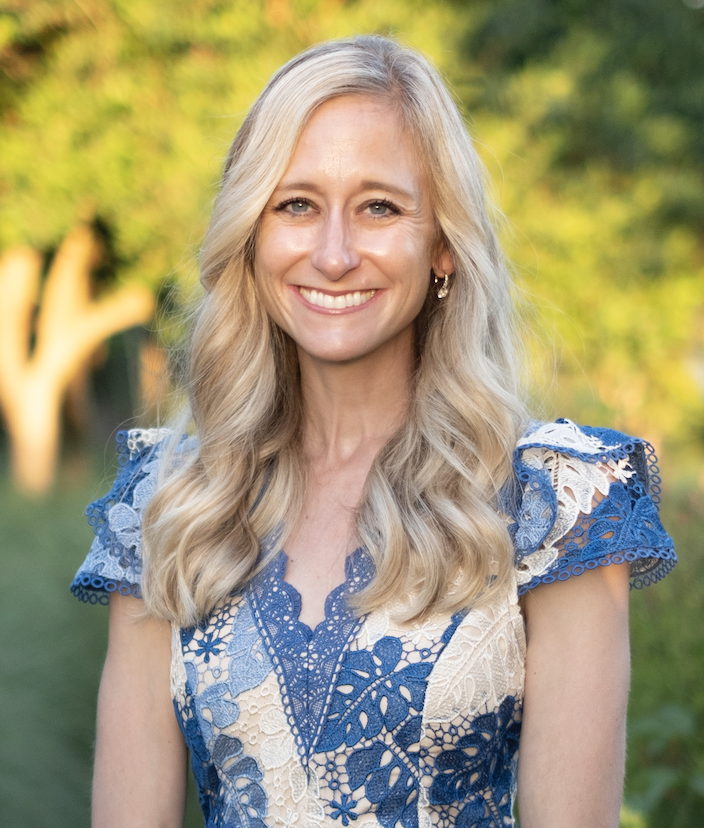
About Mallary Tenore Tarpley
Mallary Tenore Tarpley is a journalism and writing professor at the University of Texas at Austin’s Moody College of Communication and McCombs School of Business. Her writing has appeared in The New York Times, The Washington Post, Los Angeles Times, and The Dallas Morning News, among other publications. She is the recipient of a prestigious Alfred P. Sloan Foundation grant, which helped support her research and writing. Mallary graduated from Providence College and has a master’s of fine arts in nonfiction writing from Goucher College. She lives outside of Austin, Texas, with her husband and two children. SLIP is her first book.
Check out her new book project here.
More posts like this:


Why “embracing the gray spaces in recovery is critical.”